Cover Projects Profile
EN / JP

Projects

Two projects

Project 01  ·  Completed
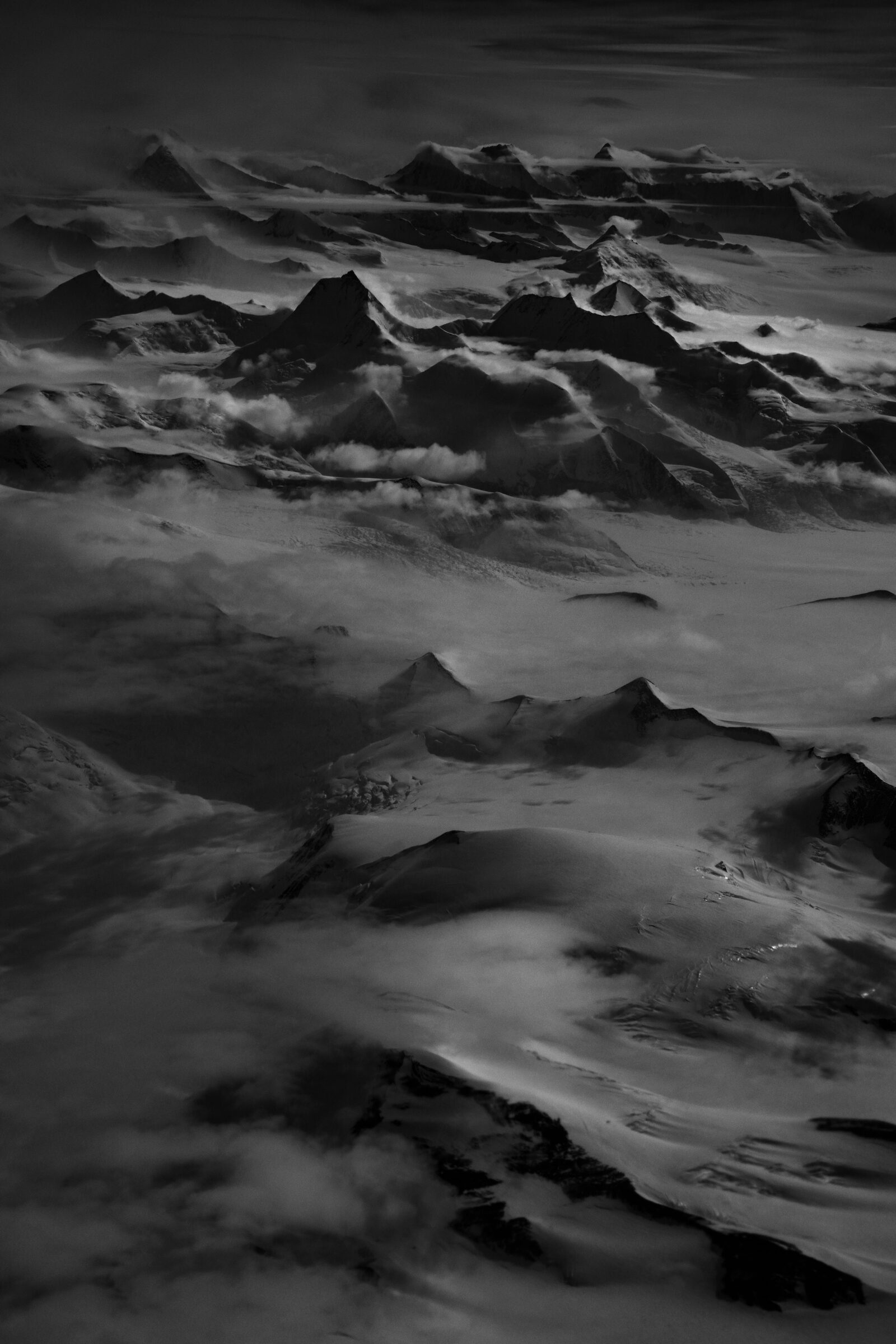
Edge of Stability — mountain ranges and ice seen from the air, Antarctica, January 2026 View Project →

Edge of Stability

Antarctica 2026 8 Photographs

An endless expanse of white stretches in every direction. In this place, even the takeoff and landing of an aircraft can dissolve into uncertainty, as the boundary between sky and ground disappears, merging everything into a single field of white.

Yet what truly overwhelmed me was the view of Antarctica from above. The scale and mass I thought I had grasped on the ground revealed themselves to be only a fragment of this vast continent. Beneath me lay a landscape shaped by millions of years, yet still shifting, breathing, and alive.

Wind carves into ice and land, while light continuously transforms the scene. Unnamed mountain ranges emerge as suspended gestures between formation and collapse. Just as I approached the continent's highest peaks, a surge of frozen wind summoned clouds, and the mountains disappeared once again into white.

What appears eternal is, in fact, held within a delicate balance. The scattered sea ice, quietly glimmering across the water, speaks of both beauty and impermanence.
Project 02  ·  Ongoing

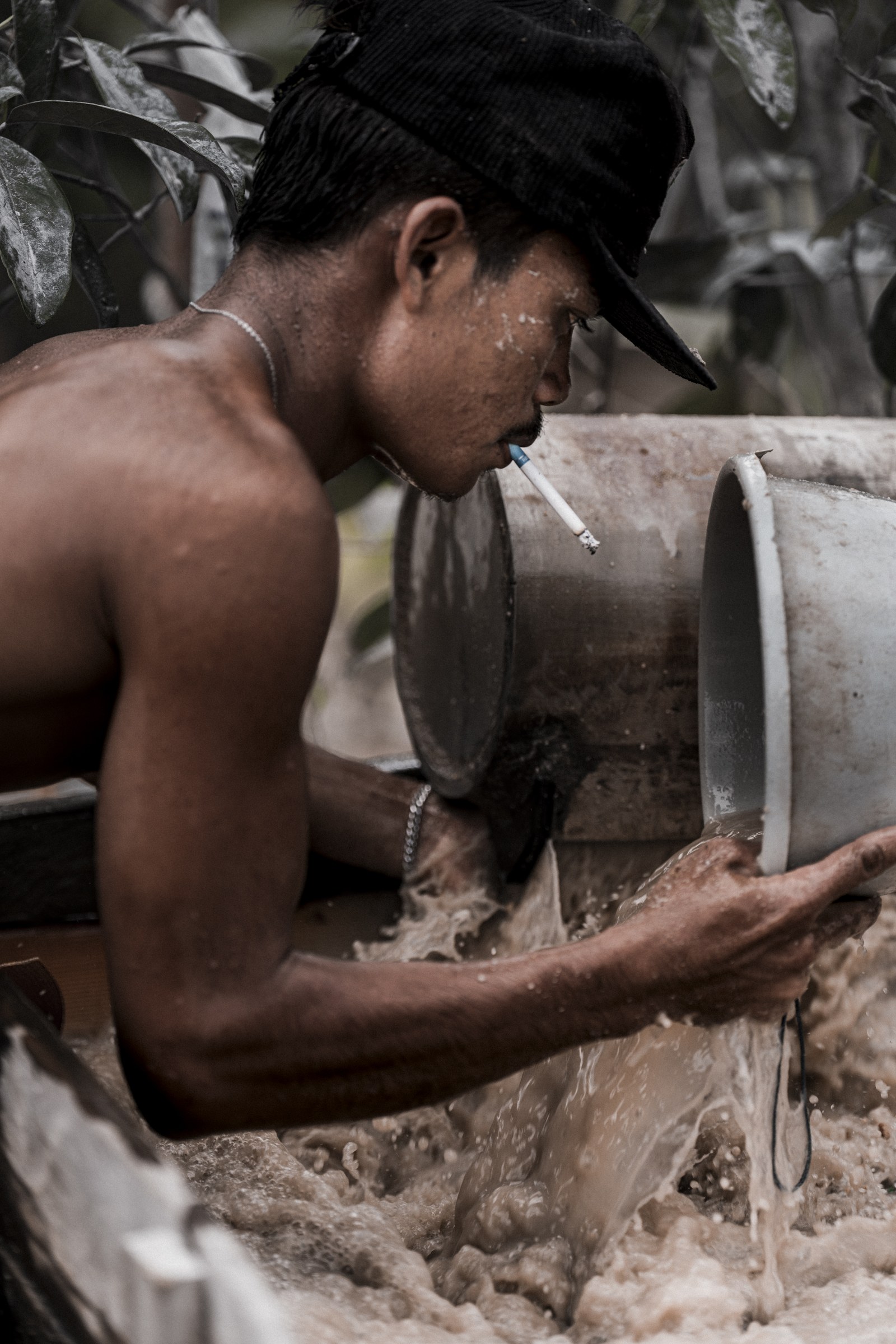
The Price of Tin — a man washing tin ore by hand, Bangka Island, Indonesia View Project →

The Price of Tin

Bangka Island, Indonesia 2026– Ongoing

Tin is essential to the smartphones and computers we use every day. It is the main component of the solder that joins electronic parts, and is found in almost every device that supports modern life, from AI data centres to cars.

Bangka Island in Indonesia is one of the world's major tin-producing regions. Tin leaves the island and travels across the world, generating wealth elsewhere. What remains are stripped land and disappearing forests. There is also another, less visible risk: radioactive materials containing uranium and thorium, concentrated through mining and ore processing. Much of this material remains on the island without adequate control.

Yet tin is also the foundation of the island's economy, supporting countless families. Some workers continue despite knowing the radiation risks. It is not simply a matter of leaving because the work is dangerous. Just as the world depends on tin, Bangka depends on it too. Over three hundred years, this cycle has become so deeply entangled that it cannot easily be undone.

In April 2026, I visited the island. Ore-processing yards stood among houses, where men handled the ore with their bare hands. Families lived only a few metres away. Water used to wash the ore flowed into a pond behind the site, where children were playing. There was no clear boundary between work and home, between contaminated ground and safe ground.

Japan consumes large quantities of Indonesian tin, and so do I. The cameras I use to make photographs and films also depend on tin, and I earn my living through those tools. Without realising it, I was already part of the cycle. Once I understood that, I could no longer see what was happening on Bangka as something separate from my own life.

The Price of Tin is a long-term photographic project tracing the unseen connections between those who benefit from a resource and those who bear its cost.